Three amigurumi guides, three answers to the same question. For a large stuffed toy, one designer uses 8 to 10 mm eyes. A supplier chart says 20 mm and up. That is not a rounding difference. It is two and a half times, for the same toy.
The three do agree on one thing, and it is the small end. Every figure below is quoted from the guide that published it, and the arithmetic that compares them is set out so you can check it.
On this page
The numbers before you buy
All three guides land in the same place for small work: 4 to 6 mm for anything palm sized. That is the only band where they agree, and you can buy it with confidence.
At the large end they do not agree at all. The largest size one designer reaches for is 10 mm. A supplier chart starts its largest band at 20 mm. Between two and two and a half times apart.
One chart lists worsted yarn in two different bands, 8 to 12 mm and 13 to 18 mm. So inside a single chart, one yarn weight covers 8 to 18 mm, a spread of 2.25 times.
The washer is permanent. Once it clicks on, the eye does not come off without cutting the fabric around it.
On children under three, all three sources say the same thing: do not use safety eyes at all.
What the three guides actually say
Two of these are working designers writing about what they personally use. The third is a supplier guide, which is the format most often copied around the internet.
| Source | Smallest | Largest | Matched to |
|---|---|---|---|
| Little World of Whimsy | 4 to 6 mm, prefers 4 and 5 | 8 or 10 mm | Finished toy size, palm sized up to jumbo |
| Elise Rose Crochet | 4.5 mm, called fiddly | 6 mm | Nothing published |
| Crochetree supplier chart | 4 to 7 mm | 20 mm and up | Yarn weight, fingering through super bulky |
The supplier chart runs in four bands: 4 to 7 mm for fingering and sport yarn, on keychains and pocket-sized animals; 8 to 12 mm for DK and worsted, on standard dolls and teddy bears; 13 to 18 mm for worsted and bulky, on larger stuffed animals; and 20 mm and up for bulky and super bulky, on big huggable plushies.
The disagreement, measured
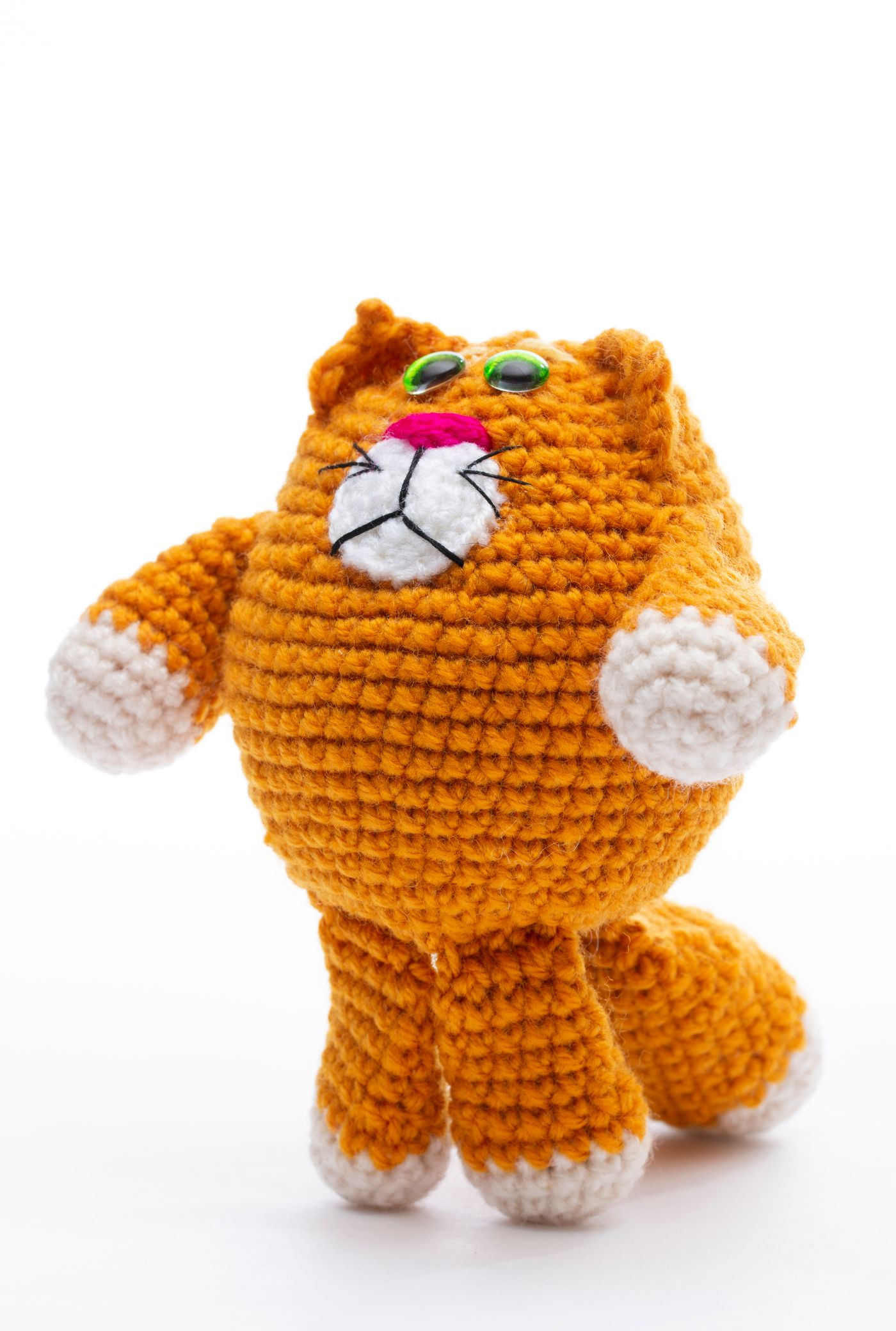
Put the two ends side by side. The designer who works in blanket and velvet yarn, on the largest toys she makes, reaches for 8 or 10 mm. The supplier chart puts 8 to 12 mm on a standard teddy bear, and does not reach the same designer’s jumbo category until 20 mm.
So the same 8 to 10 mm eye is one guide’s largest recommendation and the other guide’s middle of the road. Follow the supplier chart for a big plush toy and you fit an eye twice the diameter, and four times the face area, of the one an experienced designer would have chosen.
Why yarn weight is the wrong thing to measure
The supplier chart indexes on yarn weight, and that is the flaw. Yarn weight tells you how thick one stitch is. It tells you nothing about how many stitches went into the head.
The chart contradicts itself on exactly this point. Worsted yarn appears in the 8 to 12 mm band and again in the 13 to 18 mm band. Read it literally and worsted covers 8 to 18 mm, a spread of 2.25 times, because the chart is quietly using the project size to break the tie and has not said so.
A keychain and a cushion can both be worked in bulky yarn. The head diameter is what decides the eye, and the designer-written guides index on that instead, which is why their numbers are tighter.
The decision you cannot undo
A safety eye is a post pushed through the fabric from the front, with a plastic washer pressed onto it from the inside. The supplier guide describes the washer as locking into place with a click or a snap, and that is exactly what it does. It is a one-way fitting.
This is the practical reason the size question matters more than it looks. A hook size can be changed on the next round. A stuffed head with two washers locked inside it cannot be corrected without cutting the fabric out from around the post and reworking the piece.
When not to use them at all
This is the one point on which all three sources agree without qualification. One states plainly that safety eyes are not recommended on projects going to babies or small children because they are a choking hazard. Another puts it harder: safety eyes are a misnomer, and should not be used on a toy for a child under three, who could choke if an eye came off. The supplier guide concedes that no handmade toy component can be guaranteed safe for an infant without official safety testing.
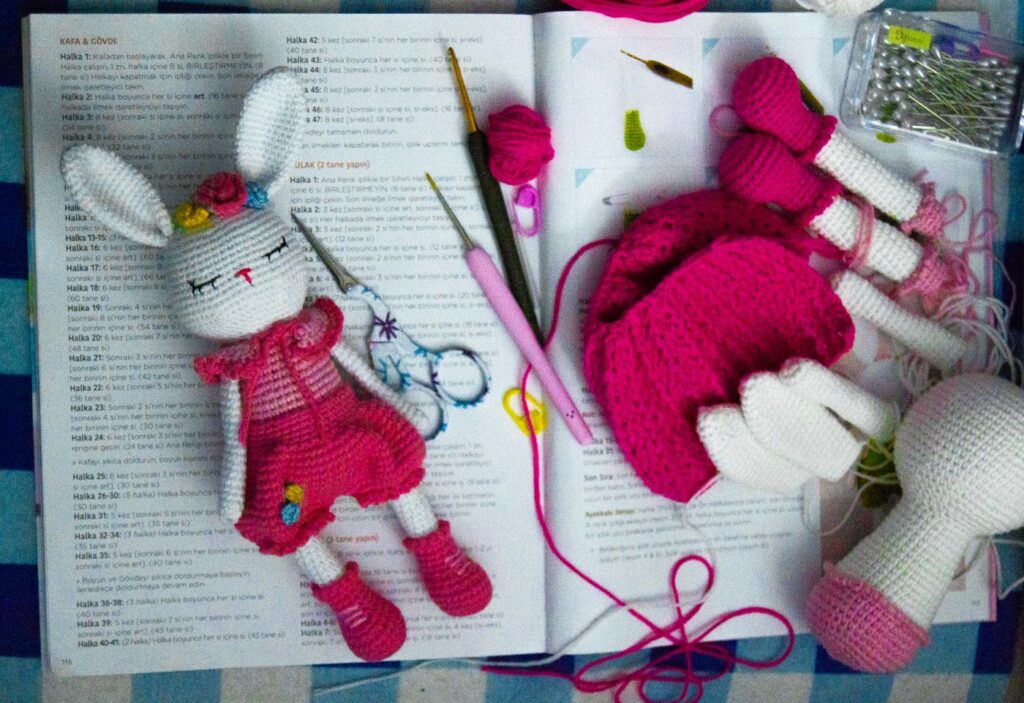
The alternative is not a compromise. Embroidering the eyes in yarn or thread is described as one of the safest ways to finish a toy, and it costs nothing but ten minutes. For anything going to a baby, embroider, and do not spend another second on the sizing question.
A method that works whichever chart you read
- Work the head and stuff it before you choose anything. A flat, unstuffed head makes every eye look too big.
- Hold the eyes against the surface without their washers, on the round you intend to use. Push nothing through yet.
- Put two candidate sizes on the same head at once, one on each side, and step back a metre. At arm’s length the difference between 8 and 12 mm is obvious in a way it never is up close.
- Only then push the posts through and fit the washers, because that step is final.
- If the toy is for a child under three, skip all of the above and embroider the face.
Frequently asked questions
What size safety eyes for a small amigurumi?
4 to 6 mm. All three guides land inside that band for palm-sized work, and one designer says she reaches for 4 and 5 mm most often. This is the safest size to buy first.
What size safety eyes for a large amigurumi?
The guides split, from 8 to 10 mm at one end to 20 mm and up at the other. Ignore both and measure the head, then hold two sizes against it before committing.
Are safety eyes safe for a baby?
No. Every source here says not to use them for a child under three, and one points out that no handmade toy part can be called safe for an infant without formal testing. Embroider the features instead.
Can you take a safety eye out after fitting the washer?
Not intact. The washer locks onto the post and is designed not to release. Removing one means cutting the fabric around it and reworking that part of the head.
Sources
- Little World of Whimsy, How to Use Safety Eyes in Crochet. Sizes matched to finished toy size, and the choking hazard warning.
- Elise Rose Crochet, Amigurumi Eyes. Sizes used in practice, and embroidered eyes as the safest finish.
- Crochetree, A Crafter’s Guide to Amigurumi Safety Eyes. The four-band yarn weight chart and the washer description.
Photographs from Pexels, free for commercial use.